

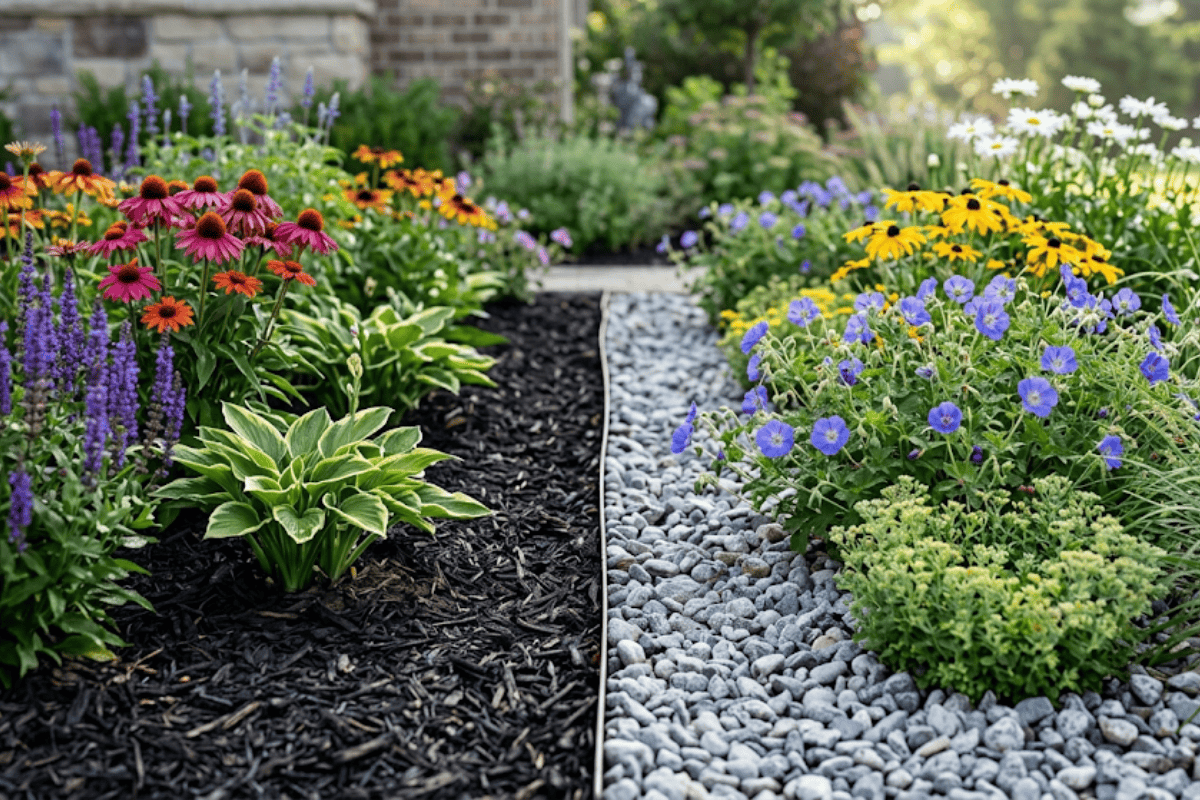
28 Jul Rock vs Mulch for Flower Beds Pros and Cons: A Tulsa Homeowner’s Guide
Rock vs Mulch for Flower Beds in Tulsa, OK
If you are weighing rock vs mulch for flower beds pros and cons, you are asking the same question thousands of Tulsa, Oklahoma homeowners face every spring. Both materials cover bare soil, hold back weeds, and give your beds a finished look, yet they behave very differently once the Oklahoma heat sets in. The right choice depends on your plants, your budget, and how much upkeep you want to sign up for. Below, we break down the real trade-offs so you can invest in a landscape that looks great and stays healthy for years.
Rock vs Mulch for Flower Beds Pros and Cons at a Glance
Before we get into the details, here is a side-by-side look at how the two materials compare across the factors that matter most. Every number and claim in this table is explained in the sections that follow.
| Factor | Rock | Mulch |
|---|---|---|
| Cost | $100 to $150 per ton, higher upfront | $30 to $50 per cubic yard, lower upfront |
| Lifespan / Longevity | 10+ years | 1 to 2 years |
| Soil Benefit | None, does not improve soil | Adds organic matter, improves soil |
| Maintenance | Low yearly, but hard to clean | Replenish each year |
| Weed Control | Good with barrier, weeds seed in gaps | Good, 2 to 4 inch layer suppresses weeds |
| Best Use | Paths, drainage, xeriscape, near structures | Flower and vegetable beds, around plants |
The Case for Mulch
Organic mulch is the traditional choice for planting beds, and for good reason. As bark, wood chips, or shredded hardwood break down, they feed the ground and add organic matter that flowers and shrubs love. University of Maryland Extension guidance on organic matter recommends aiming for healthy organic content in flower beds, and a fresh layer of mulch adds organic matter to the soil year after year as it decomposes. This is the single biggest reason gardeners keep coming back to it.
Mulch also excels at holding water in the ground during a hot Tulsa summer. A proper 2 to 4 inch layer suppresses weeds while it shades the soil, and University of Minnesota Extension notes that mulch improves soil moisture retention so plants need less frequent watering. Colorado State University research on how mulch limits evaporation backs this up, and the EPA points out that a good mulch layer also helps prevent soil erosion after heavy rain. Because Oklahoma soils are high in mineral content but low in organic matter, Oklahoma State University Extension calls mulching one of the most valuable practices a local gardener can adopt.
The main drawback is upkeep. Organic mulch lasts only 1 to 2 years before it breaks down and needs to be replenished each year, so you will pay for material and labor on a recurring basis. At roughly $30 to $50 per cubic yard, the lower upfront cost is appealing, but those annual refreshes add up over time.
The Case for Rock
Rock, sometimes called rock mulch or stone, offers the opposite set of trade-offs. Once it is installed over a quality weed barrier, it can last 10+ years without replacement, which makes it a favorite for homeowners who want a low, hands-off yearly routine. Rock will not wash away in a downpour or blow around in high wind, and it gives beds a clean, permanent, architectural look.
The catch is that rock does not improve soil. It adds no organic matter and can actually make beds hotter, reflecting heat back onto tender flowers and stressing shallow-rooted plants during an Oklahoma July. Weed control is good with a barrier, but weeds still seed in the gaps as leaves and dust settle between the stones, and pulling them out of rock is far more tedious than pulling them out of soft mulch. Maintenance is low yearly, but the material is hard to clean once debris works its way down.
When Rock Is the Better Choice
Rock is not wrong, it is simply suited to specific jobs. Consider stone when your project involves one of these situations:
- Dry-creek beds, swales, and drainage areas where you need water to move freely
- Pathways and high-traffic zones that would grind mulch into mud
- Xeriscape or low-water designs planted with succulents and native grasses
- Foundation borders and areas near structures where you want to avoid organic material against the wall
- Slopes and windy spots where lightweight mulch tends to migrate
Cost, Lifespan, and Long-Term Value
At first glance, mulch looks cheaper. At $30 to $50 per cubic yard, mulch carries a lower upfront cost than rock, which typically runs $100 to $150 per ton and represents a higher upfront investment. The picture changes when you factor in lifespan. Because mulch lasts 1 to 2 years and rock lasts 10+ years, the stone slowly earns back its higher starting price over a decade of no replacement.
That said, cost should never be the only factor. If a bed is full of annuals, perennials, roses, and shrubs, the soil-building payoff of mulch usually outweighs the long-term savings of rock. Reserve rock for the spots where you are covering ground rather than growing in it. A thoughtful landscape often uses both, and a professional installation puts each material exactly where it performs best.
Questions to Ask Before You Decide
Use these questions to match the material to your goals before any material is delivered:
- Are you planting living flowers and shrubs, or simply covering bare ground?
- How much annual maintenance are you realistically willing to do?
- Does the bed hold water, or does it need better drainage?
- Is the area in full Oklahoma sun where reflected heat could stress plants?
- What look do you want, a soft natural bed or a crisp permanent border?
Why Choose Elite Outdoor Services
Choosing between rock and mulch is easier when someone has installed both across hundreds of local yards. Elite Outdoor Services, also known as Elite Outdoor Landscaping, has more than 20 years of experience in landscape design, installation, hardscape, irrigation, drainage, and lighting throughout the Tulsa area. Based in Broken Arrow, we serve Tulsa, Bixby, Jenks, Owasso, and Glenpool, and we know exactly how Oklahoma soil, sun, and storms treat a flower bed over time.
When you work with our team, we assess your soil, your plants, and your drainage before recommending a material, so you never pay for the wrong solution twice. We can also tie your new beds into a broader design, pairing fresh mulch with smart irrigation and well-placed lighting that keeps the finished look beautiful after dark. Ready to give your flower beds a healthy, polished foundation? Call us and let our crew handle the heavy lifting.
Conclusion
There is no single winner in the rock versus mulch debate, only the right material for the right spot. Mulch feeds your soil, holds moisture, and gives flowers the environment they need to thrive, while rock delivers a long-lasting, low-yearly-effort surface for paths, drainage, and low-water designs. Most Tulsa, Oklahoma landscapes benefit from a smart blend of the two. If you want beds that look great today and stay healthy for years, let the experienced team at Elite Outdoor Services design and install a plan built for your yard. Reach out to us at (918) 695-0974 to get started.
Ready to upgrade your beds? Contact Elite Outdoor Services today for a free consultation.
Frequently Asked Questions
Is it better to put rock or mulch around plants?
For living flowers and shrubs, mulch is usually better because it improves the soil, retains moisture, and moderates temperature as it breaks down. Rock is a stronger choice around structures, along pathways, and in drainage areas where you are covering ground rather than growing in it. Many yards use both, matched to each bed’s purpose.
What are the disadvantages of rocks in landscaping?
Rock adds no organic matter and does nothing to improve soil, and it can reflect heat that stresses tender plants in full sun. Weeds and debris still collect in the gaps between stones, and they are far harder to remove than weeds in mulch. Rock is also heavy and difficult to relocate once installed.
Is rock cheaper than mulch in the long run?
Rock costs more upfront, roughly $100 to $150 per ton compared with $30 to $50 per cubic yard for mulch. Because rock can last 10 or more years while mulch is replaced every 1 to 2 years, stone can become the cheaper option over a long period. For living flower beds, the soil benefits of mulch often outweigh those savings.
Do rocks or mulch attract more bugs?
Organic mulch can attract insects such as termites and ants because it is a natural food source as it decomposes, especially when piled against a home. Rock does not feed insects, though moisture and debris trapped beneath it can still shelter pests. Keeping any material a few inches away from your foundation reduces the risk.
Can you put rock over mulch?
It is generally not recommended, because the mulch underneath continues to decompose and settle, causing the rock layer to sink and mix unevenly. If you want a lasting rock bed, remove the old mulch first and install a quality weed barrier before adding stone. This keeps the surface clean and stable for years.

Sorry, the comment form is closed at this time.