

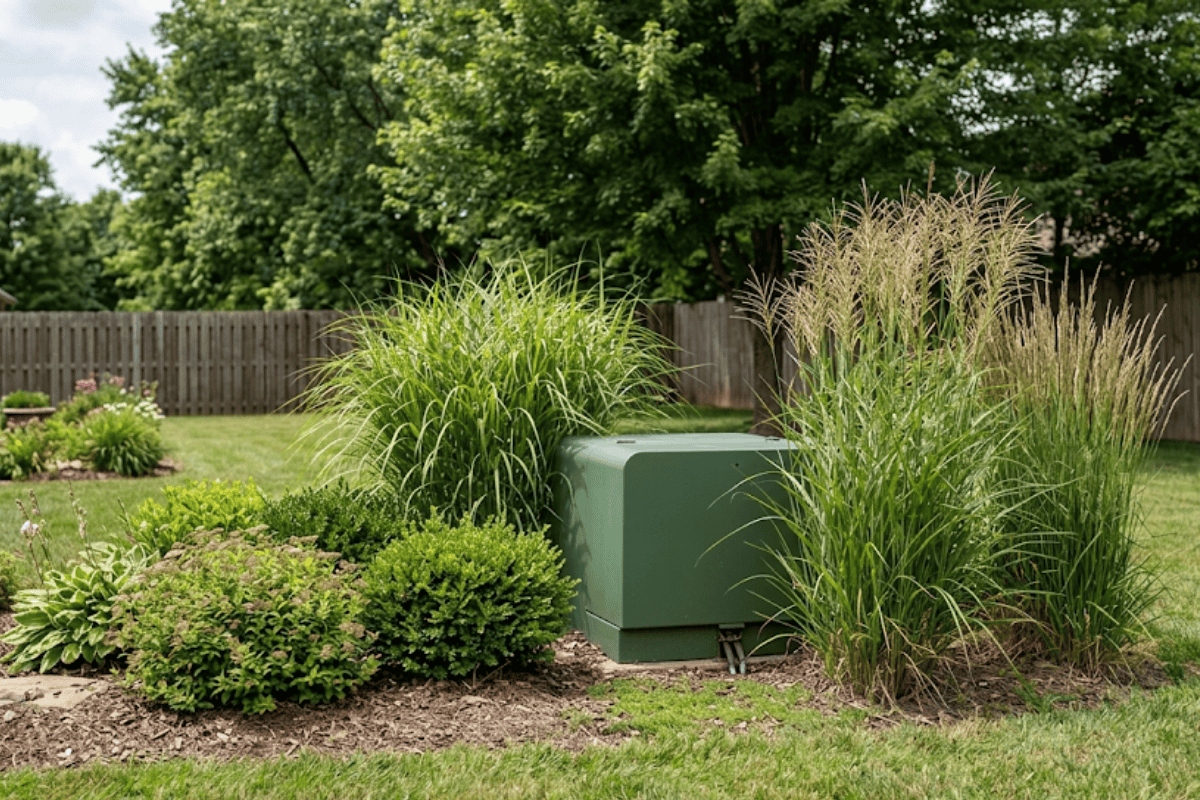
28 Aug Landscaping Ideas to Hide Utility Boxes in Your Yard
Before a single shovel goes into the ground near a utility box, call 811. That single step, required by law and free to use, is what separates a landscaping project that goes smoothly from one that damages an underground line, triggers a repair bill, or worse. Once that step is out of the way, there are plenty of landscaping ideas to hide utility boxes in your yard without creating a maintenance headache or a safety issue down the road. This guide walks through the options that actually work, and the clearance rules that determine which ones are safe to use near your box.
Whether you’re dealing with a green transformer box, a gray cable pedestal, or a meter mounted on your house wall, the same basic principle applies: screen it from view without blocking the access utility crews need. Get that balance wrong and you either end up with an eyesore that landscaping never quite covers, or a beautiful screen that a utility crew has to tear apart the next time they need to service the box.
Know Your Clearance Requirements First
Utility companies require open access around transformer and pedestal boxes, and the specific distances vary by utility and by the type of box. As a general guideline, structures, fences, and dense shrubs typically need to stay at least several feet of open space from the front of an electrical transformer and a shorter distance from the sides, with additional vertical clearance above it. These numbers are not guesswork on the utility’s part, they exist so a crew can safely open the box and pull equipment straight out without obstruction. Before planting anything, it is worth a quick call to your utility provider to confirm the exact clearance for your specific box, since gas, water, and electrical boxes are not all held to the same standard.
Ornamental Grasses for a Soft, Movable Screen
Tall ornamental grasses are one of the most forgiving options for softening the look of a utility box without permanently obstructing it. They can be cut back to the ground each year, they tolerate being brushed against or temporarily flattened by a utility worker without lasting damage, and they regrow quickly. Because grasses have a light footprint and shallow root system compared to shrubs, they are a lower-risk choice for planting near the required clearance zone, though you should still keep them outside the documented distance rather than right up against the edge.
Evergreen Shrubs Planted at a Safe Distance
Evergreen shrubs provide year-round coverage, which solves the problem of a utility box being screened in summer and fully exposed once deciduous plants drop their leaves for winter. The key with shrubs is choosing varieties based on their mature height and width, not just how they look at planting time, since a shrub that starts small but grows into the clearance zone within a few years creates the exact obstruction the utility rules are meant to prevent. Planting shrubs at the outer edge of your property’s usable space, angled to draw the eye away from the box rather than directly in front of it, tends to look more intentional than a single specimen planted dead center.
Decorative Screens and Lattice Panels
A freestanding lattice panel or decorative screen, positioned outside the required clearance distance, can visually block a box from the most common sightlines, like the street or a patio, without anything touching the box itself. This works especially well for pedestal-style boxes that are shorter and easier to screen from one or two angles rather than needing coverage from all sides. Because a screen is a structure and not a living plant, check with your utility company on whether structures face the same clearance rules as vegetation in your area, since some jurisdictions treat them differently.
Container Plantings for Flexibility
Large potted plants offer something permanent landscaping cannot: the ability to move them out of the way in minutes if a utility crew needs full access. This makes containers a practical option for the front-facing side of a box where you want coverage most of the time but need to preserve true accessibility. Mixing a few evergreen container plants with seasonal color keeps the area from looking static year-round, and grouping several pots at varying heights does more to disguise a boxy shape than a single large planter.
Boulders and Hardscape Elements
Large decorative rocks or a low stacked-stone edge, placed to redirect the eye rather than conceal the box outright, is a durable option that needs no maintenance and cannot grow into a clearance zone the way plants can. This works best paired with grasses or low plantings rather than as a standalone solution, since a bare boulder next to a utility box does not do much on its own to draw attention elsewhere. If digging is involved in setting boulders or a stacked-stone edge, that still counts as safe planting territory and needs a locate request first, since buried lines can run closer to the surface than most homeowners expect.
| Option | Best For | Maintenance Level |
|---|---|---|
| Ornamental grasses | Areas needing seasonal, low-risk coverage | Low — annual cutback |
| Evergreen shrubs | Year-round screening at a safe distance | Moderate — pruning to control mature size |
| Lattice or decorative screen | Blocking a specific sightline, like from the street | Low — occasional cleaning or repainting |
| Container plantings | The front-facing side that needs true accessibility | Moderate — seasonal watering and rotation |
| Boulders and hardscape | A permanent, no-maintenance visual anchor | Very low — essentially none |
What Not to Do
Avoid planting directly against the box itself, even with something small, since roots and stems can interfere with ventilation on electrical equipment and create the kind of obstruction that leads to a utility company simply removing the plant during a service call. Skip anything that grows into a dense thicket over time, like fast-spreading shrubs, without a clear plan for keeping it pruned back from the clearance zone every year. And always confirm the box type before you plan around it, since a gas meter, a cable pedestal, and an electrical transformer can have very different clearance and safety requirements even though they might look similar from the yard. If you’re not sure whether a marking request covers your entire project area, a state utility locator service can walk you through what is and isn’t included before you start digging.
Why Choose Elite Outdoor Landscaping
Because every utility box comes with its own clearance rules depending on whether it is gas, electric, or cable, we start by confirming what we’re actually working around rather than applying a one-size-fits-all planting plan to every box in a Broken Arrow yard. That distinction changes what is safe to plant and how close it can go, and skipping that step is how a landscaping plan ends up getting partially undone the first time a utility crew needs access.
We also design the screening around how the box is actually seen day to day, whether that is from the street, a patio, or a neighbor’s yard, so the plants or structure you end up with are solving the sightline that actually bothers you rather than covering the box uniformly from every angle, which usually looks less natural and requires more upkeep than it needs to. And because we handle full landscape design for the property, the utility box screening gets planned as part of the overall layout instead of as an afterthought bolted onto an existing design. If you’re tackling this alongside a broader yard refresh, our post on where to start with landscaping walks through sequencing a project like that from the ground up.
Conclusion
The single most important takeaway is to call 811 and confirm your utility’s specific clearance distance before you plant anything near a box, since that number determines every other decision in this guide. Once you know your safe distance, ornamental grasses, evergreen shrubs, or a decorative screen positioned outside that zone will solve the eyesore without creating a problem for the next utility service call. If you’re planning this kind of project in Broken Arrow, Oklahoma, a quick site walkthrough can confirm the box type and clearance before you buy a single plant.
Want a screening plan that actually holds up? Contact Elite Outdoor Landscaping to get started.
Frequently Asked Questions
How far should landscaping be from a utility box?
Clearance requirements vary by utility company and box type, but electrical transformers commonly require several feet of open space in front and a shorter distance on the sides, with additional vertical clearance above. Always confirm the exact distance with your utility provider before planting, since gas, water, and electrical boxes are not held to the same standard.
Can I plant directly next to an electrical box?
No, planting directly against an electrical box can interfere with ventilation and access, and a utility crew may remove any vegetation that obstructs the required clearance zone during a service visit. Keep all plantings outside the documented clearance distance for your specific box.
What plants are safe near a transformer box?
Low-growing ornamental grasses and small evergreen shrubs planted at the confirmed clearance distance are generally safe choices, since they can be maintained without growing into the box’s access zone. Avoid fast-spreading or dense shrubs that require constant pruning to keep clear of the required distance.
Do I need to call before digging near a utility box?
Yes, calling 811 before any digging project is required by law in most states and is free. This applies even to small projects like planting shrubs, since underground lines often run near visible utility boxes and digging into one can cause serious injury or a costly repair.
Will hiding a utility box affect the utility company’s access?
It shouldn’t, as long as any structure or planting stays outside the required clearance zone for that specific box. Screening designed to stay within those boundaries, like container plants that can be moved or grasses planted at a safe distance, keeps the box fully accessible while still improving how it looks in the yard.

Sorry, the comment form is closed at this time.