

16 Mar Landscape Lighting for Safety and Ambience: Why Placement Matters More Than Brightness
Good outdoor lighting does more than make a backyard look attractive at night. It reduces risk, discourages unwanted activity, and extends the time you can comfortably spend outside. According to the U.S. Department of Justice, well-lit properties reduce opportunities for crime by eliminating the dark zones that create cover. That alone makes lighting a worthwhile investment for any homeowner.
But here’s where many people go wrong: they focus on brightness instead of placement. Adding more wattage does not automatically make a property safer or more inviting. Poor placement creates glare, casts harsh shadows, and leaves key areas just as dark as before.
Why Brightness Alone Is Not Enough
Overly bright fixtures cause glare, which actually reduces visibility rather than improving it. Your eyes adjust to the brightest point in your field of vision, making everything around it appear darker by comparison. This creates blind spots right where you least want them.
Uneven lighting is another common issue. A few floodlights pointed at a wall may illuminate one section while leaving pathways, steps, and entry points completely dark. Beyond safety concerns, excessive light also contributes to light pollution and wastes energy, especially when fixtures are pointed in directions that serve no practical purpose.
Strategic Placement for Safety
Effective landscape lighting in Tulsa, OK starts with identifying the areas that matter most. A few key priorities include:
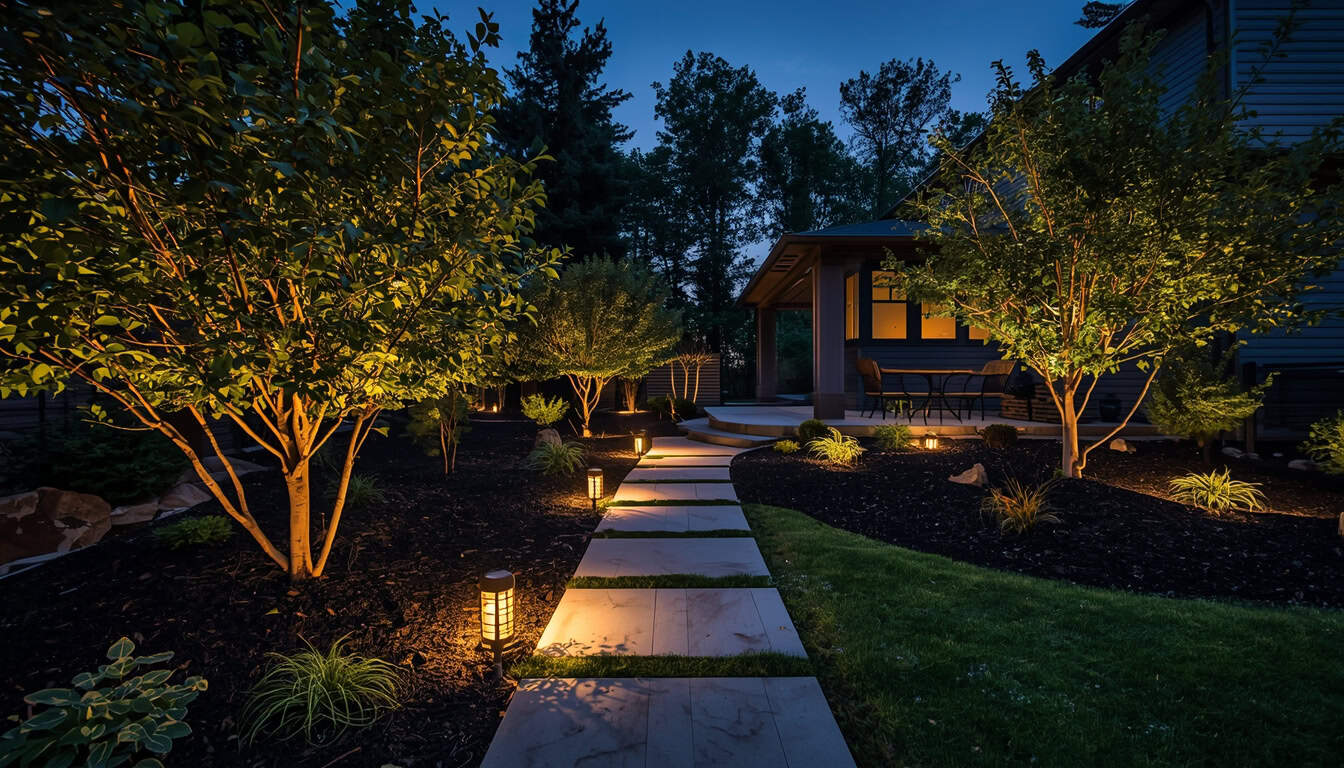
Pathways and steps: Low-level path lights guide foot traffic and prevent trips and falls, especially on uneven surfaces.
Entry points: Doors, gates, and garage areas should be clearly lit to deter unauthorized access and improve visibility when arriving home at night.
Dark zones near fences and patios: These corners are often overlooked but can create unnecessary vulnerability. Subtle fixtures placed at strategic angles eliminate hiding spots without flooding the space with light.
Driveways and hardscape features: Gentle lighting along driveways and around patios improves navigation while highlighting the craftsmanship of the space.
Creating Ambience Through Design
Safety and atmosphere are not competing goals. A layered lighting approach achieves both at once. The idea is to use multiple light sources at different heights and angles rather than relying on a single bright fixture.
Uplighting trees adds depth and drama to a backyard, drawing the eye upward and creating a sense of scale. Accent lighting on stone walls, fire pit surrounds, and patio features highlight texture and add warmth. Choosing fixtures with warm color temperatures, typically in the 2700K to 3000K range, creates a comfortable, inviting atmosphere that feels natural rather than clinical.
Why Professional Planning Makes a Difference
Every property is different. Slope, vegetation, hardscape layout, and architecture all influence where and how lighting should be placed. Outdoor lighting design in Tulsa, OK should reflect those site-specific conditions rather than following a one-size-fits-all approach.
When lighting is planned alongside landscaping in Tulsa, it integrates naturally with the overall design. Fixtures complement hardscape edges, highlight planting beds, and reinforce the visual flow of the space. That level of coordination requires a site evaluation and a clear understanding of how the space is used.
The Right Light in the Right Place
Placement is what separates a thoughtfully designed outdoor space from one that simply has lights installed. When done well, lighting creates balance: enough visibility to feel safe, enough warmth to feel at home.
If you are considering upgrading your backyard lighting, schedule a consultation with Elite Outdoor Services to build a custom plan that fits your property. Learn more at eliteoutdoortulsa.com/outdoor-lighting.

Sorry, the comment form is closed at this time.